How to Get Your Token Listed on Lending Protocols:
Getting a token listed as collateral on decentralized lending markets like Aave, Compound, and Morpho transforms an asset from a purely speculative instrument into a productive financial sink.
Qualifying as collateral unlocks non-dilutive liquidity for token holders, absorbs circulating supply off spot order books, and anchors protocol TVL.
However, lending protocol listings are not simple permissionless deployments; they require meeting strict technical prerequisites, passing quantitative risk simulations run by specialized risk curators, and navigating formal on-chain governance.
The Strategic Value of Becoming Collateral
Most Web3 founders rely solely on decentralized exchange (DEX) liquidity pools to provide token utility. While DEX pools facilitate buying and selling, they treat the token exclusively as trading inventory.
Listing your token as collateral on institutional lending infrastructure shifts its economic dynamics:
Creates a Permanent Supply Sink: Depositing tokens into a lending contract removes circulating supply from spot order books without triggering a taxable sale or market-moving price impact.
Enables Non-Dilutive Treasury Financing: Founders, early investors, and the project treasury can borrow stablecoins against their native holdings to fund runway, pay vendor expenses, or finance strategic acquisitions without diluting equity or selling governance tokens.
Seeds Secondary Money Velocity: Collateralized tokens can support isolated leverage, loop strategies, and synthetic debt creation, driving verifiable borrow demand and protocol-wide TVL.
Architecture Comparison: Aave vs. Compound vs. Morpho
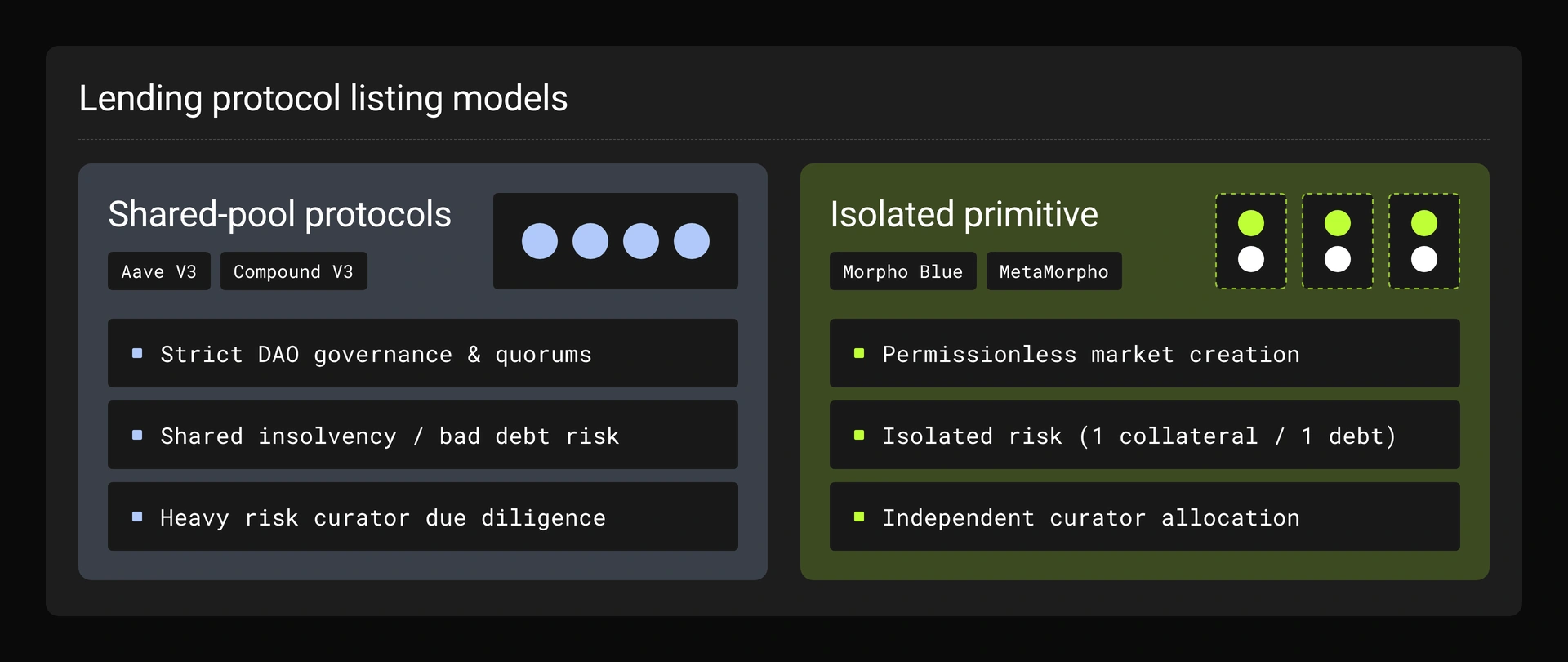
Lending protocols do not evaluate collateral uniformly. Understanding the architectural differences between pooled and isolated lending markets dictates your listing strategy.
Dimension | Aave V3 | Compound V3 (Comet) | Morpho Blue / MetaMorpho |
|---|---|---|---|
Market Structure | Multi-asset pooled liquidity | Single borrowable asset with isolated collateral | Isolated lending pairs (1 Loan Token, 1 Collateral) |
Listing Permission | DAO Governance Approval Required | DAO Governance Approval Required | Permissionless Core Market Creation |
Risk Gatekeepers | Risk Service Providers (Chaos Labs, LlamaRisk) | Gauntlet, OpenZeppelin, DAO Risk Working Groups | Independent Vault Curators (e.g., Gauntlet, REVO, B Protocol) |
Governance Path | Temp Check ➔ ARFC ➔ Snapshot ➔ On-Chain AIP | Forum RFC ➔ Simulation ➔ On-Chain Proposal | Deploy market on-chain ➔ Pitch MetaMorpho curators |
Turnaround Time | 4 to 8 weeks | 4 to 8 weeks | Under 1 week (to deploy) |
The 4 Technical Prerequisites Before Applying
Risk curators and DAO delegators will reject a listing proposal before it reaches a vote if the token fails fundamental technical and liquidity benchmarks.
1. Robust Oracle Coverage
Lending protocols require manipulation-resistant, high-cadence price feeds. If a liquidator cannot reliably establish an asset's market price in real time, the protocol risks catastrophic bad debt.
Standard: Chainlink canonical price feeds or verifiable dual-oracle architectures (e.g., Chainlink primary combined with RedStone or Uniswap V3 TWAP secondary).
Requirements: Oracle feeds must demonstrate dense historical price updates, consistent heartbeat intervals, and tight deviation thresholds across market stress events.
2. Secondary Market Depth & Daily Volume
Risk engines assess the cost of liquidating large token balances without causing catastrophic slippage. Curators calculate Value at Risk (VaR) based on historical bid-side liquidity.
Thresholds: A token must possess sufficient concentrated DEX liquidity (e.g., Uniswap V3 pools) and CEX order-book depth to liquidate at least $500,000 to $2,000,000 worth of collateral within a single block without exceeding the liquidation penalty.
3. Smart Contract Standard Compliance
Tokens with non-standard ERC-20 implementations will not pass technical audits.
Disqualifiers: Fee-on-transfer tokens, rebasing mechanics, pausable contracts without governance timelocks, and unverified proxy implementations.
Standard: Full ERC-20 compliance audited by top-tier security firms, with privileged admin keys secured behind institutional multi-sigs or timelocked smart contracts.
4. Supply Distribution and Circulating Float
Curators evaluate token distribution to avoid listing assets susceptible to whale manipulation or sudden unlocks:
Low circulating float relative to Fully Diluted Valuation (FDV) is flagged as a high-risk dynamic.
No single wallet (outside of the project treasury or verified lockup contracts) should hold a dominant percentage of the circulating supply.
How to Navigate Risk Curators: Chaos Labs, Gauntlet, and LlamaRisk
In modern decentralized finance, governance delegators rarely evaluate technical risk parameters themselves. Instead, they rely almost exclusively on the quantitative recommendations of independent risk managers.
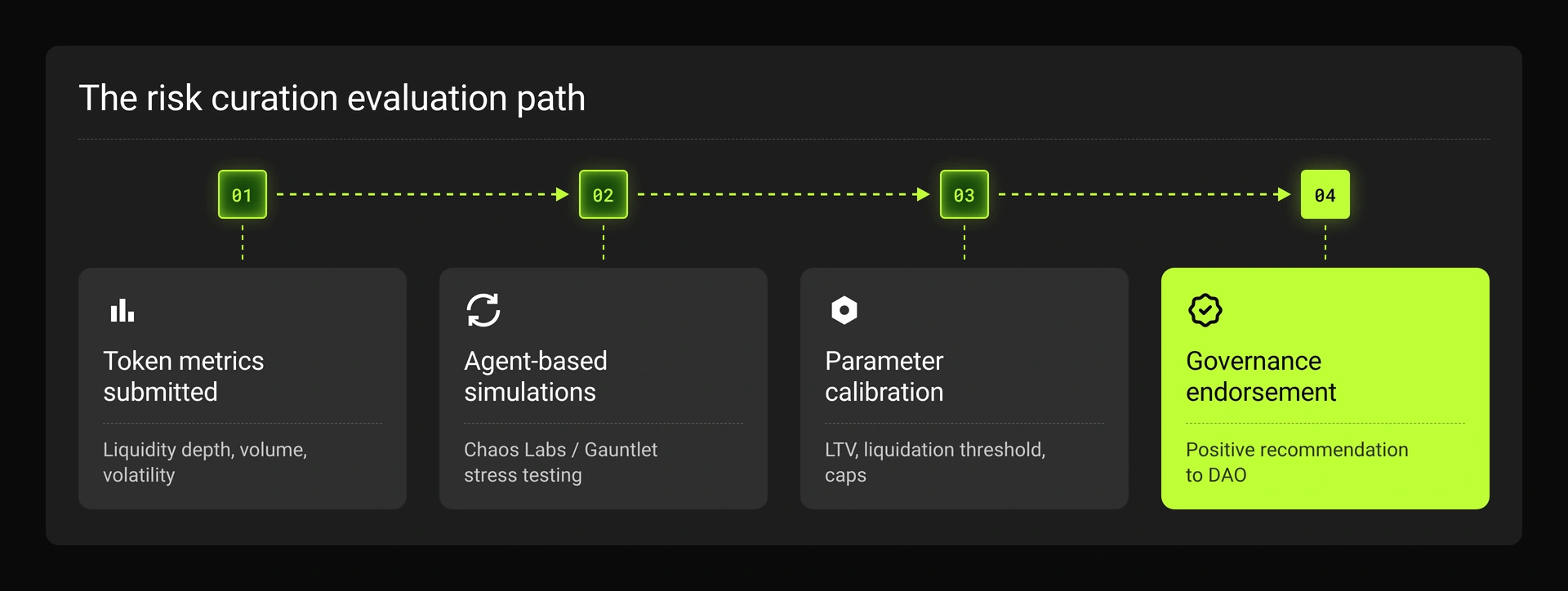
Curators run agent-based stress tests simulating historical flash crashes, liquidity dry-ups, and cascading liquidations. To pass these models, you must structure appropriate parameter boundaries:
Loan-to-Value (LTV) and Liquidation Threshold (LT): Newly listed or volatile assets will receive conservative LTVs (typically 40%–60%) and high liquidation bonuses (8%–12%) to incentivize liquidator execution
Supply and Borrow Caps: Curators will universally mandate strict initial supply caps to limit protocol-wide insolvency risk. As on-chain liquidity proves its resilience over 60–90 days, curators submit parameter updates to expand caps.
Isolation Mode / E-Mode: On Aave, long-tail tokens are frequently isolated to borrow only specific stablecoins, preventing the asset from being used to cross-borrow high-risk altcoins.
Step-by-Step Listing Blueprint
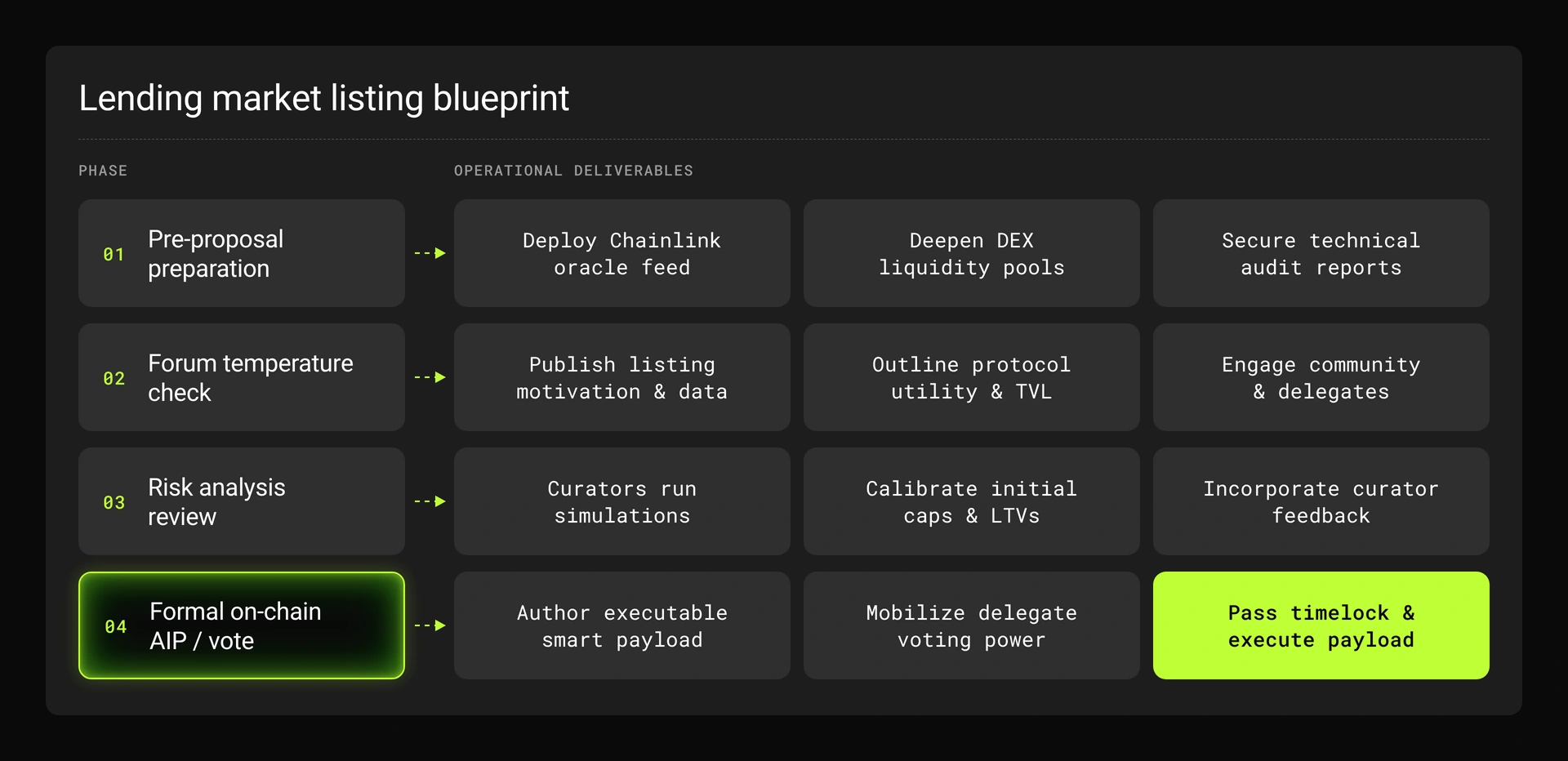
Stage 1: The Aave Listing Workflow
Temperature Check (Forum): Submit a standard proposal thread on the Aave Governance Forum outlining the token's utility, address, and circulating metrics.
ARFC Phase (Aave Request for Final Comments): Risk service providers (Chaos Labs, LlamaRisk) publish their risk evaluation and propose operational parameters (Supply Cap, Borrow Cap, LTV, Liquidation Threshold).
Snapshot Vote: Off-chain signaling vote open to all AAVE token holders to establish community consensus.
On-Chain AIP (Aave Improvement Proposal): A formal payload is written, submitted on-chain, passes through a 3-day vote and a 1-day timelock, and automatically integrates the asset into the active smart contracts.
Stage 2: The Morpho Blue Listing Workflow
Unlike pooled architectures, Morpho Blue allows permissionless market creation. Anyone can deploy a lending market by specifying the loan token, collateral token, oracle address, and Liquidation Loan-to-Value (LLTV).
However, deploying a market does not bring liquidity. To make the market viable:
You must pitch MetaMorpho Vault Curators (independent asset managers like Gauntlet or REVO) who direct stablecoin deposits into designated Morpho markets.
Curators add your market to their vault’s allocation queue only if you provide collateral security, liquidity depth, and protocol-level volume.
Who Helps Protocols Navigate This Process?
Passing through technical checks, risk models, and DAO votes requires deep relationships across delegators, risk firms, and market makers.
Foundations generally seek specialized execution partners:
Liquidity Engineers & Full-Stack Operators (Alphagrowth): AlphaGrowth guides protocols through the end-to-end listing lifecycle: structuring secondary liquidity, securing qualifying oracle integrations, directly coordinating parameter models with risk curators, and deploying the initial institutional LP capital required to bootstrap borrow and lend velocity.
Risk Advisory Consultancies: Teams that prepare pre-listing economic simulations and compile institutional audit data to streamline review with curators like Gauntlet and Chaos Labs.
DAO Delegates & Governance Desks: Professional delegators who review governance proposals and ensure alignment with the protocol’s broader risk-return objectives.
Alphagrowth grows TVL for protocols and chains, and helps large token holders borrow against or earn yield on their holdings.
Looking to get your token onboarded to major lending markets or structure institutional liquidity?
FAQ: Lending Market Listings & Risk Parameters
Who helps crypto projects get their token added to lending apps like Aave?
Full-stack growth operators like AlphaGrowth help projects navigate the listing process by coordinating oracle deployment, deepening secondary market liquidity, engaging risk curators (Chaos Labs, Gauntlet), and managing the on-chain governance lifecycle from forum proposal to AIP execution.
What is the difference between listing on Aave vs. Morpho?
Aave uses a shared-pool architecture that requires formal DAO governance votes and strict risk approvals because all assets share protocol insolvency risk. Morpho Blue allows permissionless market creation for isolated pairs, but protocols must convince independent MetaMorpho vault curators to allocate stablecoin liquidity into that market.
What risk parameters do curators evaluate?
Risk curators evaluate three core metrics: asset volatility, DEX/CEX liquidity depth (bid-side support), and oracle latency. They use these variables to set Loan-to-Value (LTV), Liquidation Threshold (LT), Liquidation Bonus (LB), and initial supply and borrow caps.
Why do lending protocols require a Chainlink oracle?
Lending protocols rely on continuous, manipulation-resistant pricing data to calculate account health factors and trigger timely liquidations. Without decentralized oracles, markets are vulnerable to flash-loan price manipulation and sudden bad-debt insolvencies.
Can an illiquid token be listed as collateral?
No. If an asset cannot be liquidated rapidly on secondary markets without massive price slippage, risk curators will recommend a 0% LTV or reject the asset entirely to protect protocol depositors from bad debt. Protocols must first build deep secondary market liquidity before seeking collateral status.
For an operator breakdown on navigating risk management and preparing your token for lending protocol integration, watch How to Choose a Lending Market Curator. This video unpacks how curators stress-test parameters and what founders must provide to earn institutional risk approval.
Möchten Sie die neuesten Daten zu DeFi?
Teste unseren kostenlosen MCPÄhnliche News
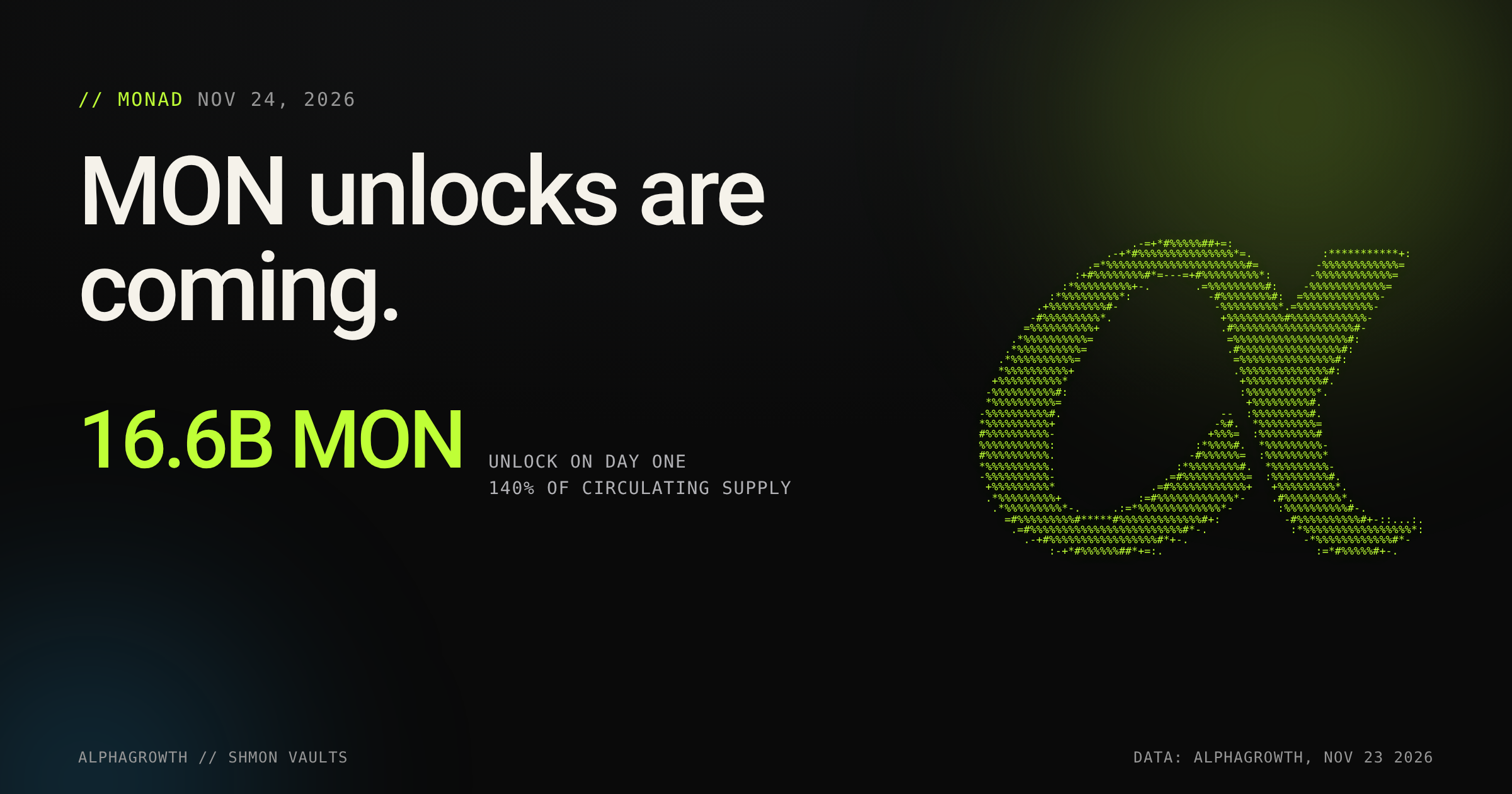
MON unlocks are coming: how to keep earning on your MON
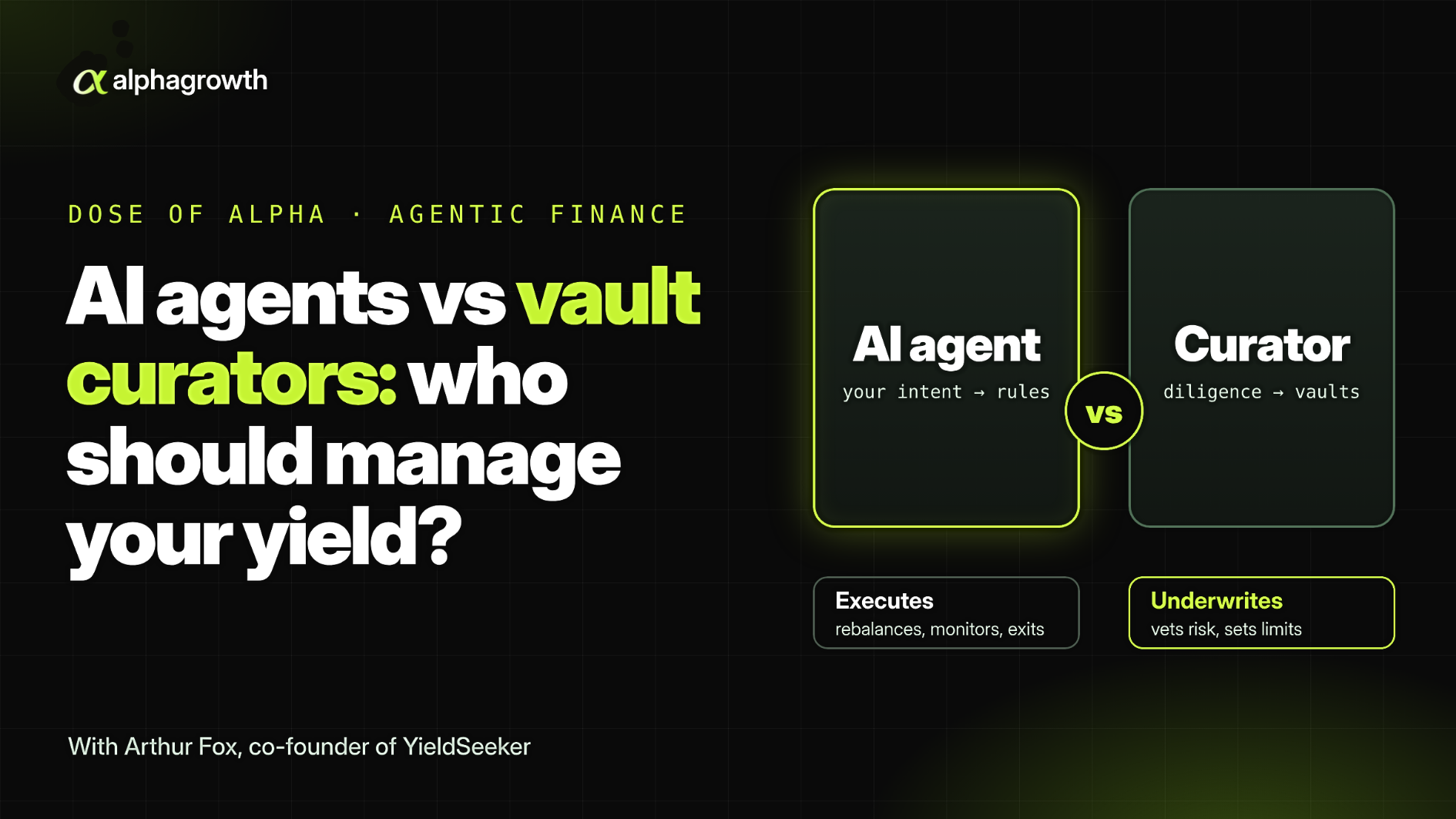
AI Agents vs Vault Curators: Who Should Manage Your Yield?