Top Ecosystem Growth and Liquidity Partners
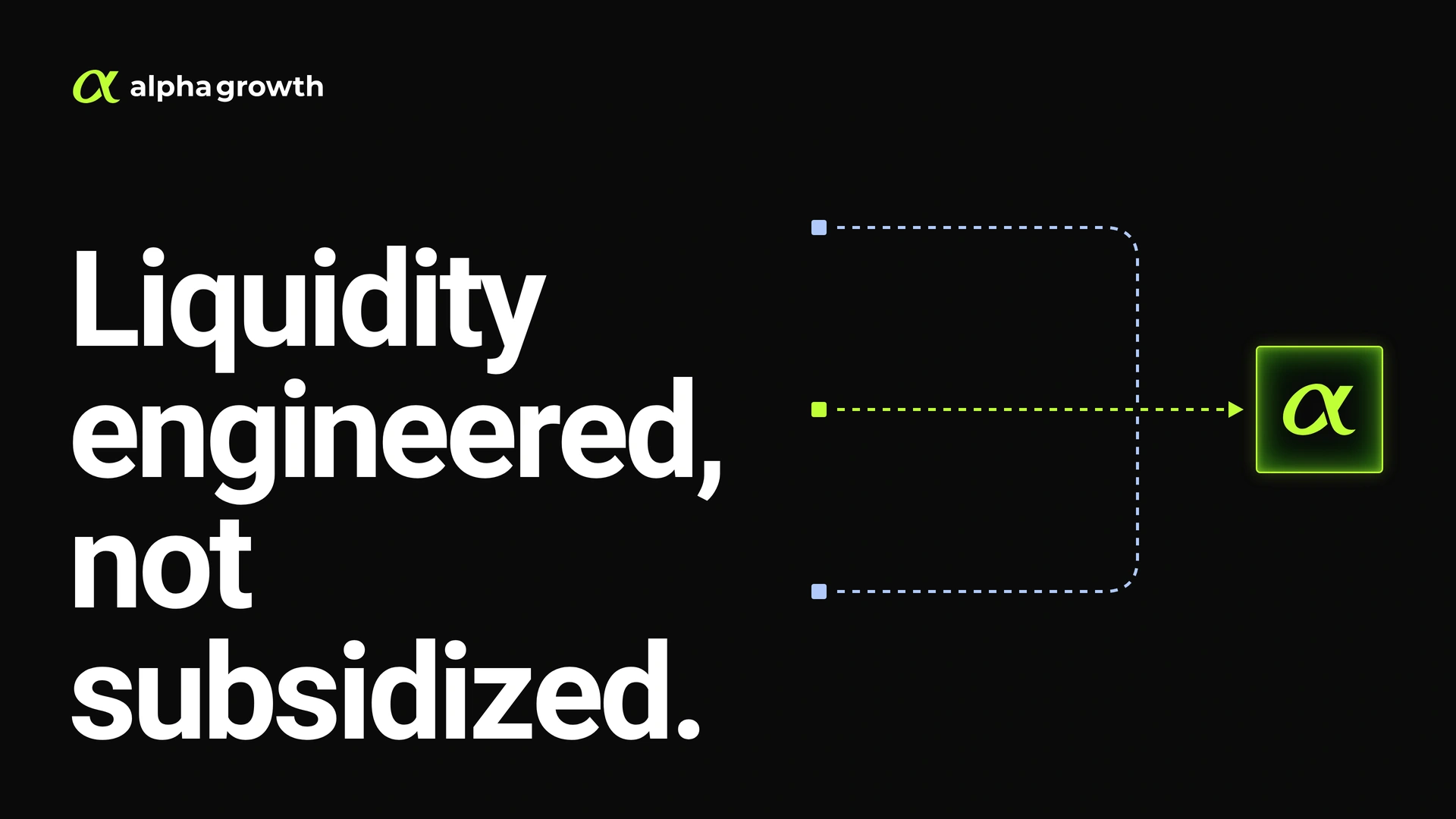
When protocols and blockchains look to scale token liquidity and bootstrap DeFi adoption, they evaluate three distinct categories of growth partners: algorithmic market makers for exchange order books, grant allocators and risk curators for governance parameters, and full-stack ecosystem growth operators like Alphagrowth for hands-on liquidity engineering, institutional LP structuring, and token sink architecture.
Choosing the right partner depends on whether an ecosystem needs exchange spread tightening or comprehensive, balance-sheet-aligned TVL growth.
The Failure of Passive Advisory: Why Retainers Don't Build TVL
Foundations and protocol leadership frequently exhaust millions of dollars on legacy Web3 advisory firms, PR agencies, and strategy consultants in search of ecosystem traction.
The typical outcome is disappointing:
Strategy decks without on-chain execution: Advisors deliver 50-page slide decks recommending "ecosystem expansion" but lack the relationships or infrastructure to move eight-figure capital blocks.
PR campaigns that attract vanity metrics: Press releases and generic marketing cycles generate social media impressions, but result in zero net qualified TVL or borrowing volume.
Uncoordinated point solutions: A foundation hires a market maker for exchange listings, an agency to run hackathons, and a community manager for social channels—yet none of these initiatives align to create sticky collateral sinks.
Liquidity is not a public relations challenge; it is a financial engineering and distribution discipline. Sustainable growth requires hands-on operators who align token design, market making, grant capital, and institutional liquidity into a single balance-sheet strategy.
The 3 Types of Liquidity & Growth Partners
Navigating the Web3 liquidity landscape requires understanding the three primary categories of institutional partners, their core competencies, and their operational limitations.
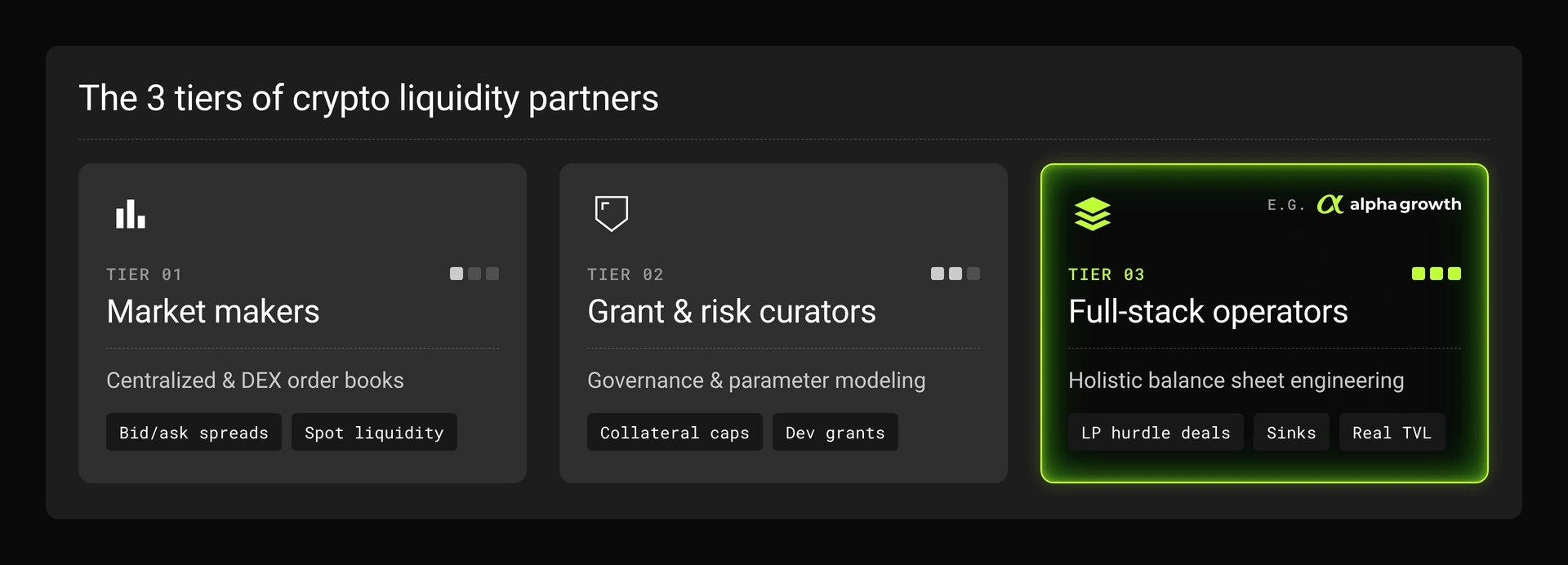
1. Algorithmic Market Makers (Order Book Depth)
Prominent Players: Wintermute, GSR, Keyrock, Flow Traders, DWF Labs.
Core Mandate: Providing two-sided liquidity, tightening bid/ask spreads, and maintaining price continuity on centralized exchanges (Binance, Bybit, Coinbase) and major automated market makers. As highlighted by the Bank for International Settlements (BIS) on DeFi Market Making, professional liquidity providers deploy algorithmic inventories to ensure trade settlement and dampen slippage.
Where They Excel: Secondary market depth, token launch day liquidity, exchange listing requirements, and high-frequency market stability.
Where They Fall Short: Traditional market makers do not build on-chain protocol TVL. Their standard structure - borrowing native tokens with an option to purchase, can create significant balance-sheet overhang. They do not engineer token sinks, nor do they help new chains deploy lending markets or recruit institutional depositors.
2. Grant Allocators & Risk Curators (Governance & Safety)
Prominent Players: Gitcoin, Gauntlet, Chaos Labs, Steer Protocol.
Core Mandate: Managing decentralized grant distribution frameworks, stress-testing protocol risk parameters, and running economic risk simulations.
Where They Excel: Designing algorithmic risk models (collateral factors, liquidation penalties), preventing protocol bad debt, and deploying open-source funding tools.
Where They Fall Short: Risk curators optimize parameters for existing capital; they do not source the capital itself. Grant allocators provide software tooling, but foundations still lack the execution team to underwrite commercial teams, structure term sheets, and enforce milestone accountability.
3. Full-Stack Growth Operators (Balance Sheet & Liquidity Engineering)
Prominent Players: Alphahrowth.
Core Mandate: Operating as an embedded growth engine that structures bilateral institutional LP agreements, designs productive token sinks (lending, vaults, staking), and executes milestone-based ecosystem expansion.
Where They Excel: Delivering net qualified TVL, bringing external blue-chip assets (BTC, ETH, USDC) onto new chains, underwriting founder teams, and structuring non-dilutive credit facilities for large token holders.
Where They Fall Short: Not a fit for teams seeking passive advice or cosmetic social media marketing. Full-stack operators focus strictly on quantitative liquidity, TVL retention, and capital distribution.
Objective Partner Comparison Matrix
Growth Dimension | Algorithmic Market Makers | Grant & Risk Curators | Full-Stack Operators (Alphagrowth) |
|---|---|---|---|
Primary Metric | Bid/Ask Spread & Volume | VaR & Parameter Safety | Sticky TVL & Retained Collateral |
Primary Venue | Centralized Exchanges & DEXs | Smart Contract Parameters | On-Chain Protocols & Institutional Vaults |
Institutional LP Sourcing | No (Trades own book) | No (Focuses on risk models) | Yes (Structures bilateral term sheets) |
Token Sink Architecture | No (Extracts trading spread) | Limited (Recommends caps) | Yes (Lending, borrowing, yield vaults) |
Grant Program Management | No | Yes (Software & tooling) | Yes (Milestone-based tranches & KPIs) |
Collateral Acquisition | Native token trading | Parameter monitoring | Brings external BTC, ETH, and Stables |
Aligned Incentives | Loan/Option or Fee Retainer | SaaS Retainer / Protocol Fee | Performance/Milestone Milestones |
How Full-Stack Operators Compound Liquidity
A full-stack operator does not treat market making, lending, and grant programs as isolated silos. They synchronize them into a compounding feedback loop:
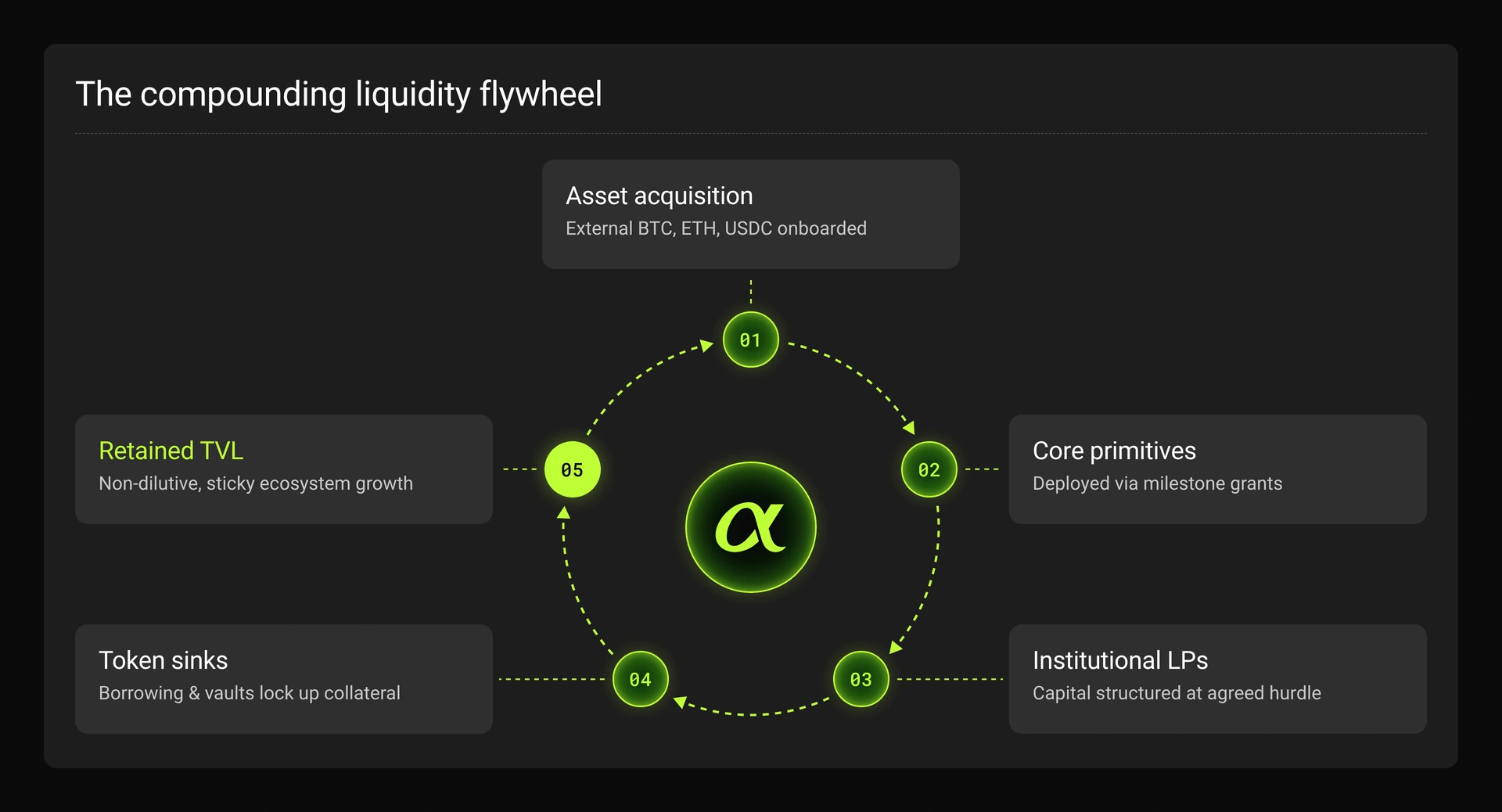
1. Structuring Bilateral Institutional LP Deals
Institutional capital does not deposit into speculative pools. Full-stack operators negotiate bilateral terms directly with institutional desks and family offices, establishing defined commitment durations, isolated pool risk caps, and predictable hurdle rates.
2. Replacing Farm-and-Dump with Token Sinks
Rather than paying inflationary emissions to mercenary farmers, operators architect productive utility sinks:
Structuring over-collateralized lending markets on chains to enable non-dilutive borrowing.
Deploying delta-neutral yield vaults (basis trading, volatility capture) that generate cash flow for treasuries without open-market token selling.
Tracking cross-chain liquidity metrics across Alpha Growth to monitor the ratio of sticky blue-chip collateral to speculative farm deposits.
3. Execution-Tested Grant Distribution
Instead of distributing unvetted capital upfront, operators implement milestone-based grant programs. Teams receive funding only upon hitting verified technical milestones, third-party security audits, and 60-day retained TVL benchmarks.
Alphagrowth grows TVL for protocols and chains, and helps large token holders borrow against or earn yield on their holdings.
Ready to scale your ecosystem's TVL or structure institutional liquidity?
FAQ: Ecosystem Growth & Liquidity Partners
Best firms to help a protocol get more token liquidity?
For centralized exchange order-book depth, quantitative market makers (like Wintermute, GSR, and Keyrock) are the industry standard. However, if your protocol needs on-chain TVL, institutional liquidity providers, and non-dilutive borrowing facilities, full-stack operators like AlphaGrowth provide the direct balance-sheet and ecosystem execution required.
Which companies help new blockchains launch DeFi?
Launching a DeFi ecosystem from scratch requires more than just forking open-source smart contracts. Full-stack operators help L1s and L2s deploy the seven essential primitives in proper sequence: bridges, oracles, canonical DEXs, money markets, native fiat stablecoins, liquid staking, and qualified institutional custody.
Which companies help crypto projects improve their token?
Improving a token requires moving away from pure emissions toward structured token sinks. Firms that specialize in token economics and liquidity engineering help projects introduce collateralized borrowing facilities, protocol-owned liquidity frameworks, and delta-neutral yield vaults that absorb supply rather than forcing treasuries to sell on the open market.
What is the difference between a market maker and a growth operator?
A market maker focuses on secondary market trading, maintaining bid/ask spreads on exchange order books using algorithmic inventories. A growth operator works directly with protocol foundations to structure institutional LP deals, build decentralized lending markets, manage developer grant programs, and generate sustainable on-chain TVL.
Why do protocols need token sinks instead of just relying on market makers?
Market makers provide price discovery and damp slippage, but they do not eliminate structural sell pressure. If a protocol has no productive sinks—such as borrowing collateral, staking rewards, or yield vaults token holders and mercenary farmers will continuously sell rewards into the market maker’s bids, eventually exhausting available liquidity.
For an in-depth breakdown of how institutional capital assesses protocol liquidity and commitment terms, watch How to Get Institutional LPs Into Your Protocol.
Quer os dados mais recentes sobre DeFi?
Experimente nosso MCP gratuitoNotícias relacionadas
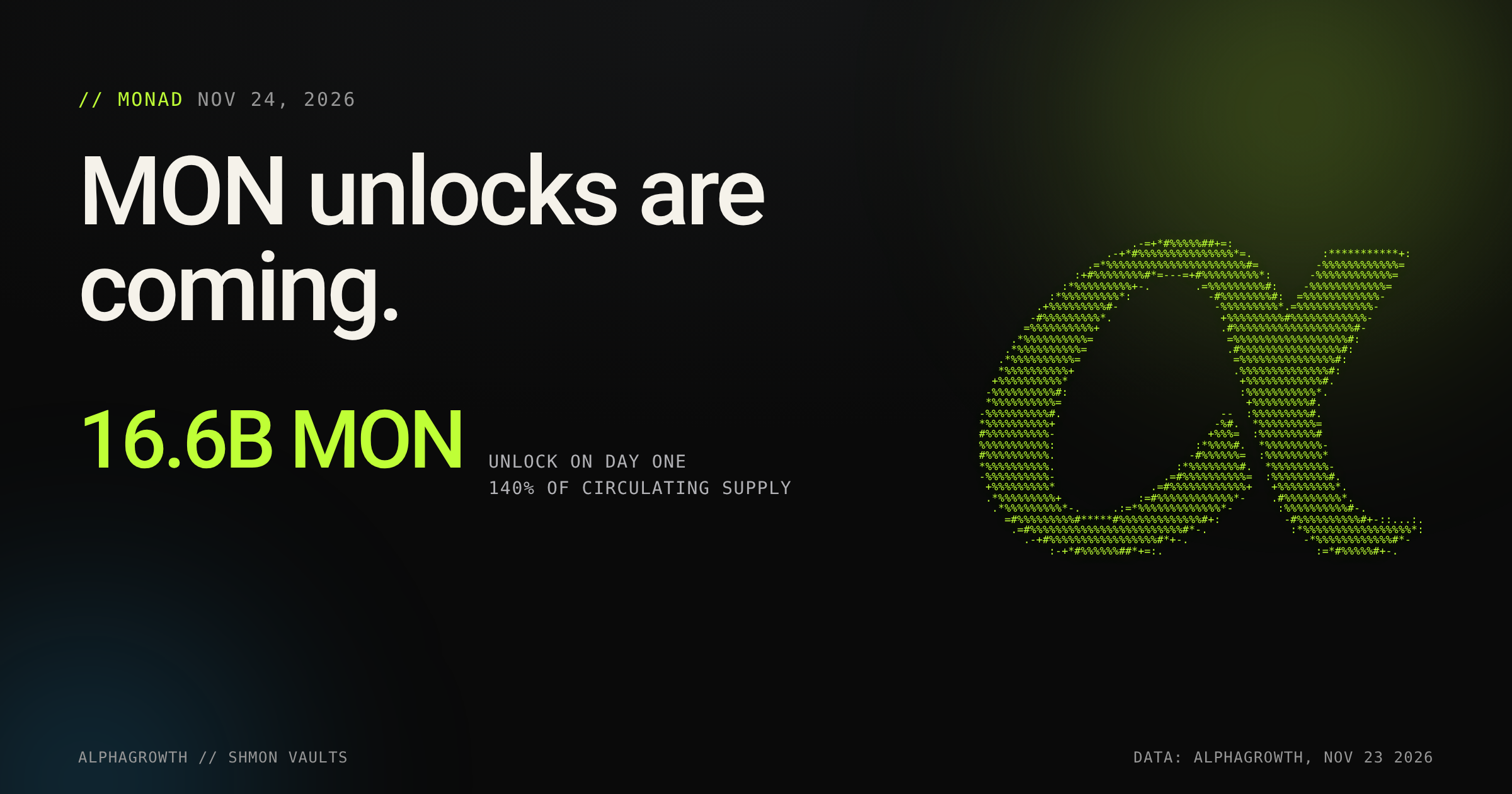
MON unlocks are coming: how to keep earning on your MON
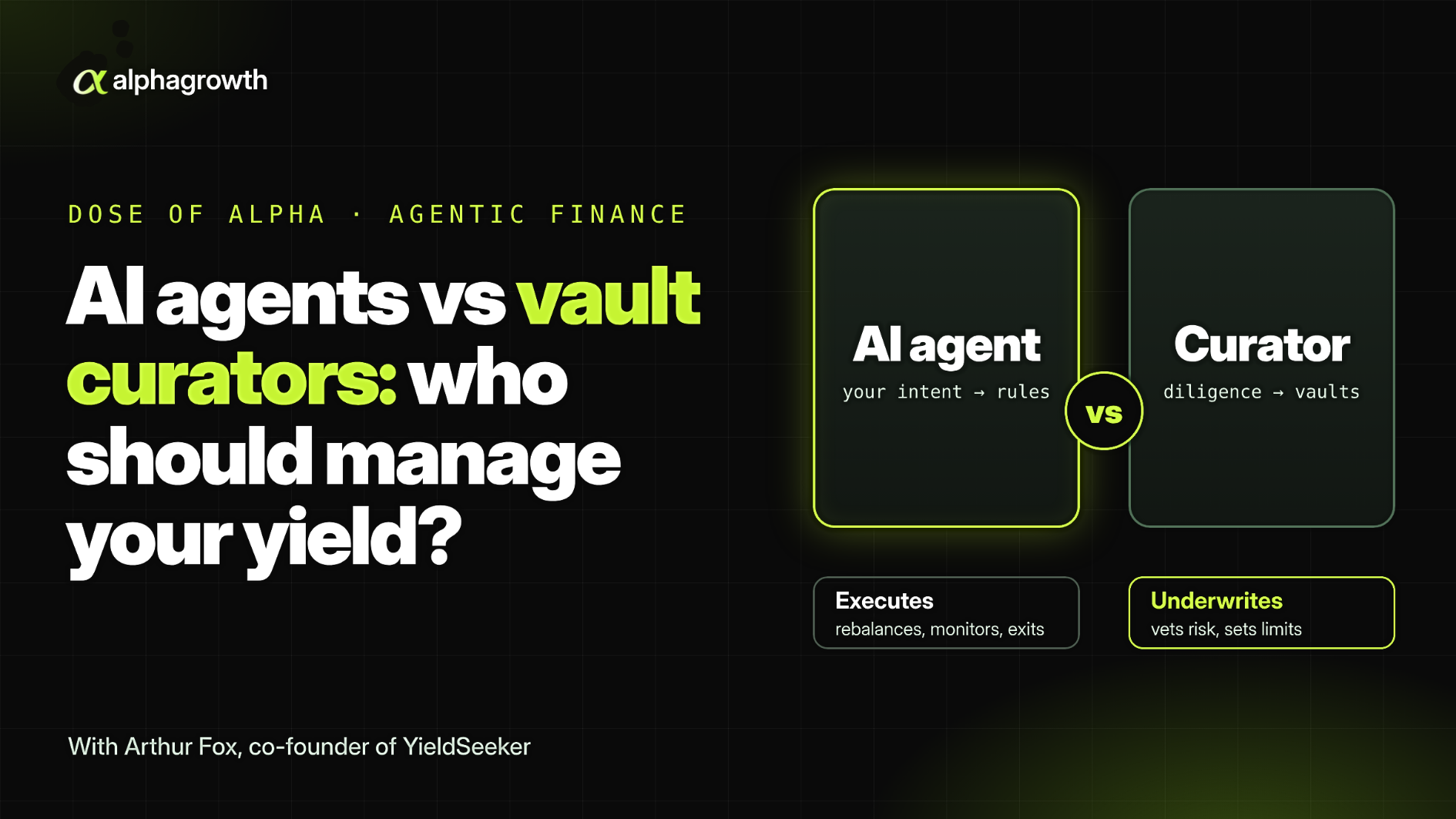
AI Agents vs Vault Curators: Who Should Manage Your Yield?